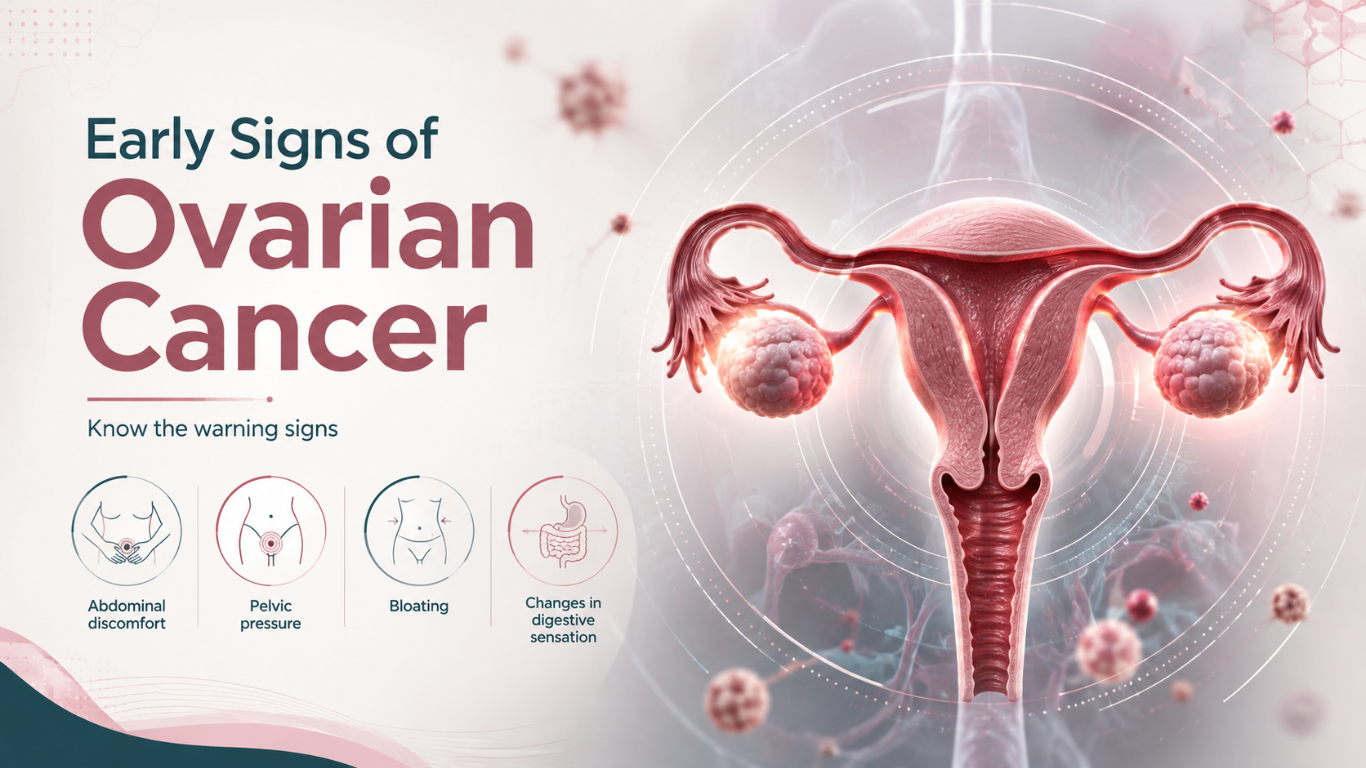
Ovarian cancer is often called a "silent" disease because its early symptoms — bloating, pelvic discomfort, feeling full quickly, or changes in bathroom habits — are easy to mistake for common digestive issues. This blog explains the key warning signs of ovarian cancer, why they are frequently overlooked, and when it's time to see a gynecologic oncologist for further evaluation. Written by the team of Dr. Shiva Gautam, Consultant Gynecologic Oncologist at Fortis Hospital Noida, it offers practical, easy-to-understand guidance to help women recognize symptoms early and seek timely specialist care for better outcomes.
- Understanding symptoms, diagnosis, and treatment choices to help women approach gynecologic health concerns with greater clarity and confidence.
- Exploring cancer care options according to the type, stage, and individual circumstances of each patient and clinical situation.
- Keeping patients informed about evolving surgical techniques, treatment approaches, and developments in gynecologic oncology.
- Highlighting the importance of timely medical evaluation, appropriate follow-up, and informed conversations with a gynecologic oncology specialist.
Ovarian cancer is often diagnosed at an advanced stage, not because it is impossible to detect early, but because its early symptoms are subtle and easy to mistake for everyday digestive or hormonal issues. Understanding these warning signs — and knowing when to see a specialist — can make a meaningful difference in how early the disease is caught and treated.
Why Ovarian Cancer Symptoms Are Easy to Miss
Unlike some cancers that produce a clear, alarming symptom, ovarian cancer tends to cause vague, non-specific complaints in its early stages. Bloating, mild abdominal discomfort, and changes in appetite are common everyday experiences for many women, which is exactly why ovarian cancer symptoms are so frequently dismissed or attributed to less serious causes such as indigestion, stress, or normal hormonal fluctuations.
Key Symptoms to Watch For
While no single symptom confirms ovarian cancer, certain patterns deserve attention, particularly when they are new, persistent, and occur more than a few times a month:
- Persistent bloating that does not resolve and seems to worsen over time, rather than coming and going with diet or digestion.
- Pelvic or abdominal pain that is unexplained and does not follow a typical pattern related to menstruation.
- Feeling full quickly when eating, or a noticeable loss of appetite without another clear cause.
- Changes in bathroom habits, including increased urinary frequency or urgency, or changes in bowel habits such as constipation.
- Unexplained fatigue or weight changes, particularly unintentional weight loss or gain in the abdominal area.
- Abnormal vaginal bleeding, especially after menopause, which should always be evaluated promptly.
The "Persistent and Frequent" Rule
A helpful guideline used by many gynecologic oncologists is to pay closer attention to symptoms that are new for you, occur frequently — generally more than 12 times a month — and persist for several weeks rather than resolving on their own. This pattern is different from occasional bloating after a heavy meal, and it is this persistence that should prompt a conversation with a doctor.
Why Early Evaluation Matters
Ovarian cancer diagnosed at an early stage, when it is still confined to the ovary, generally has significantly better treatment outcomes than cancer diagnosed after it has spread within the abdominal cavity. Unfortunately, because early symptoms are vague, a large proportion of ovarian cancers are diagnosed only at an advanced stage. This makes awareness of these subtle warning signs, and prompt evaluation when they occur, genuinely important for early detection.
What to Expect When You See a Specialist
If you experience persistent symptoms, your doctor may recommend a pelvic examination, transvaginal ultrasound to assess the ovaries, and a blood test for CA-125, a tumor marker that can be elevated in some ovarian cancers, though it is not specific to cancer alone. If these initial tests raise concern, referral to a gynecologic oncologist for further evaluation, additional imaging, or biopsy may follow. Seeing a specialist early, rather than waiting to see if symptoms resolve on their own, allows for faster, more accurate diagnosis.
Who Is at Higher Risk
While ovarian cancer can affect any woman, certain factors increase risk, including a family history of ovarian or breast cancer, known genetic mutations such as BRCA1 or BRCA2, increasing age, and never having been pregnant. Women with these risk factors should be particularly attentive to persistent symptoms and may benefit from discussing personalized screening or risk-reduction strategies with a gynecologic oncologist.
Don't Wait to Get Checked
It is understandable to hope that bloating or occasional discomfort will simply pass, especially given how common these complaints are for unrelated reasons. However, when symptoms are new, persistent, and unexplained, it is always worth having them evaluated rather than waiting. Early evaluation does not mean assuming the worst — in most cases, symptoms will have a benign explanation — but it ensures that if something more serious is present, it is caught as early as possible.
A Final Word
Trusting your body and advocating for further evaluation when something feels persistently wrong is one of the most powerful tools you have for early cancer detection. If you have experienced persistent bloating, pelvic discomfort, or any of the symptoms discussed above, don't hesitate to schedule a consultation with a gynecologic oncologist for a thorough evaluation.